

Trick-or-Treating, but Make it ACCESSIBLE!
For many families, the checklist for a fun Halloween night is pretty simple: costume, bag or bucket, stroller or wagon, and a neighborhood with the biggest candy bars. Let’s roll!
For families of children with disabilities or different support needs, there can be a lot more to think through. Starting with: Can we even participate?
Will the sidewalks accommodate my child’s wheelchair? Will there be something besides candy that my child can enjoy? Will someone wait patiently while my child uses a communication device?
If my child becomes overwhelmed, will the people around us respond with understanding or judgment? What if my child wanders or runs off? Could a jump scare at someone’s front door leave my child too distressed to continue?
For some families, those questions can be enough to keep them home.
This year marks Magro Speech Therapy’s fourth annual Inclusive Trick-or-Treat, an event born from the belief that local families deserve opportunities to enjoy community traditions together, with fewer barriers, more support, and room to participate in whatever way works for them.
Making room for different ways to participate
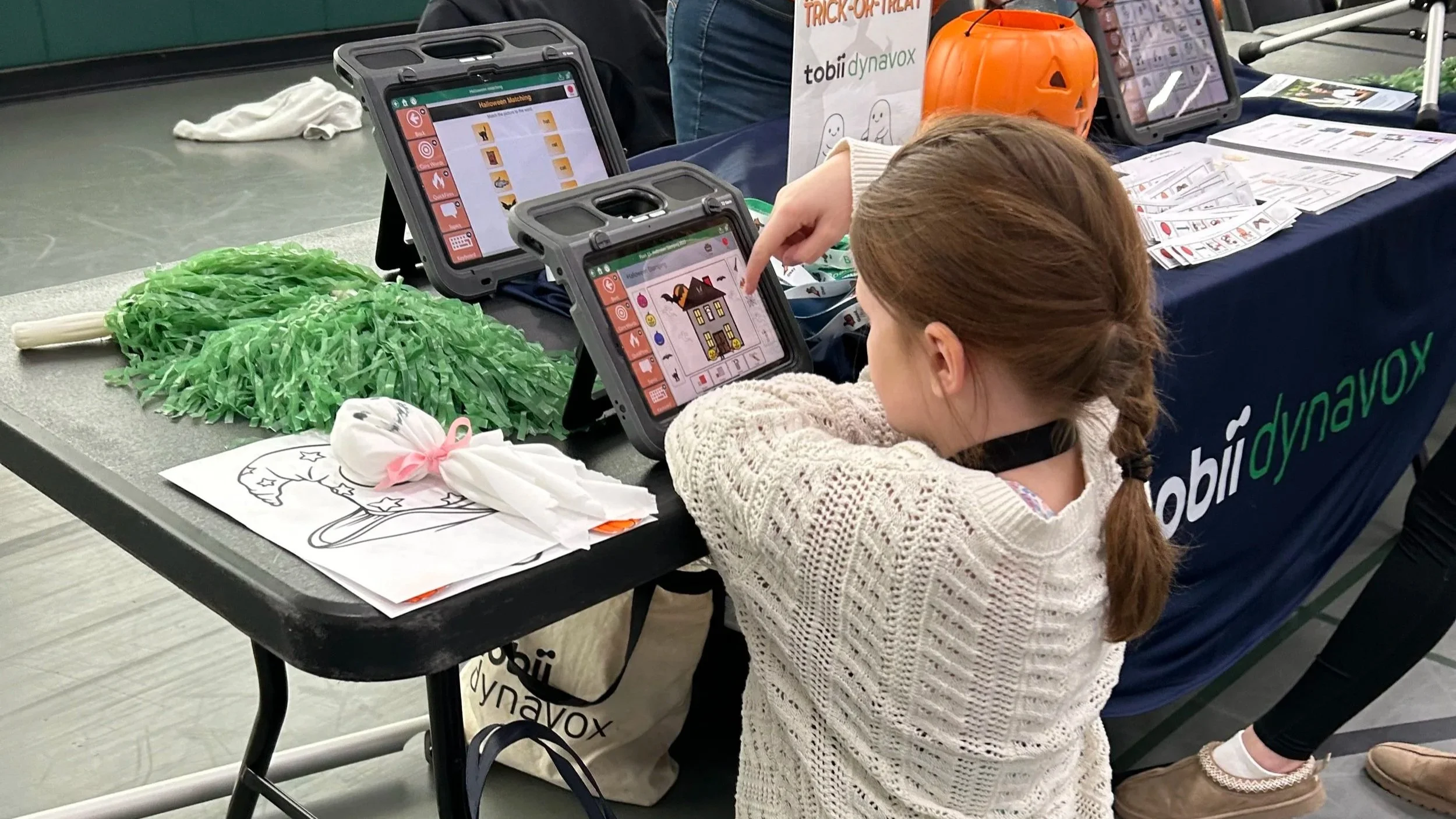
Enjoying Halloween can look different from one person to the next.
One child might arrive in a carefully chosen costume and visit every station. Another might wear their everyday clothes, spend most of their time watching, and choose one activity to explore. Someone might try every activity for just a minute before moving on. Some may speak; others may use a communication device, signs, gestures, or participate quietly.
Each of those experiences, and many more, belongs here.
Our event is designed specifically with individuals with disabilities and different needs in mind. Accessible trick-or-treat stations, non-food treats, flexible activities, sensory supports, and spaces to take a break give families more choices about how they participate.
Costumes are welcome, never required. Families can move at their own pace, skip a station, pause, or rejoin when ready. No one has to say “trick or treat” or communicate in a particular way to receive a treat or take part.
The goal is for each person to have an experience that feels enjoyable and meaningful to them.
The people around a child shape the experience, too
An accessible event depends on how people respond to one another.
A child may need extra time to approach a table. They may turn away from an activity, communicate in a way that is unfamiliar to others, or become overwhelmed. In those moments, the adults around them can help by remaining calm, patient, and available.
Giving a family space, respecting a caregiver’s guidance, and responding without judgment can make it easier for everyone to take the next step.
We want parents to feel comfortable bringing their child exactly as they are that day. That includes the excited moments, the quiet moments, and the moments when everyone needs a break.
What future professionals can learn here
Our collaboration with St. Bonaventure University’s School of Business, alongside participating student groups under the leadership of Dr. Todd Palmer, extends the impact of this event.
Students gain practical experience recognizing barriers and adapting activities and environments to support people with disabilities. They practice allowing more time, respecting different communication styles, and offering choices about participation.
Those skills have a place in every profession.
The students volunteering today will go on to manage teams, serve customers, design services, and make decisions that affect their communities. Experiences like this give them something concrete to carry forward: a better understanding of whose needs to consider and how their choices can improve access.
A community effort, with families at the center
Local sponsors, businesses, volunteers, and community partners help make this event possible and keep it free for families. Through donations, participation (or both), these incredible people help create a place where kids with disabilities and different needs can enjoy a fun Halloween tradition alongside the people who matter to them.
The event also gives families a chance to connect with local businesses and learn about resources, services, and opportunities available in their community. Those connections might include specialized supports, sensory-friendly and accessible haircuts, or a conversation with the owner of a local home inspection company who also has a child with a disability.
Each connection can offer something valuable: practical help, shared experience, or a familiar face who understands.
We welcome all ages to join us, including older individuals with disabilities who would enjoy participating. Family, friends, siblings, and caregivers are encouraged to attend as well!
Join us for the fourth annual Inclusive Trick-or-Treat!
Saturday, October 24, 2026
11 a.m.–1 p.m.
Challenger Learning Center, 182 East Union Street, Suite 2, Allegany, NY
Free admission; advance family registration required
Learn more and register your family here.
Different tricks. Different treats. Everyone belongs just as they are.